
By Phenelle Segal, RN, CIC, FAPIC, Founder, Infection Control Consulting Services
Key Takeaways
A recent Infection Control Today roundtable found that reusable lead aprons and thyroid collars worn in operating rooms, cath labs, and interventional suites routinely fall outside formal cleaning and disinfection protocols.
We have flagged this same gap across ambulatory surgery centers (ASC), freestanding radiology centers, and other facilities for years. The roundtable confirms what our own facility assessments have already shown.
No single federal regulation or accrediting body standard specifically dictates how often lead garments must be cleaned, which leaves facilities relying on manufacturer instructions that are often inconsistent or missing.
Storage location sets the bar. Aprons kept in the OR or procedure room are expected to be wiped down between cases, though that expectation isn't consistently met.
Facilities that assign clear ownership of lead garment cleaning across infection prevention, perioperative leadership, and radiology tend to close this gap faster than those that leave it undefined.
An Overlooked Corner of the Perioperative Environment
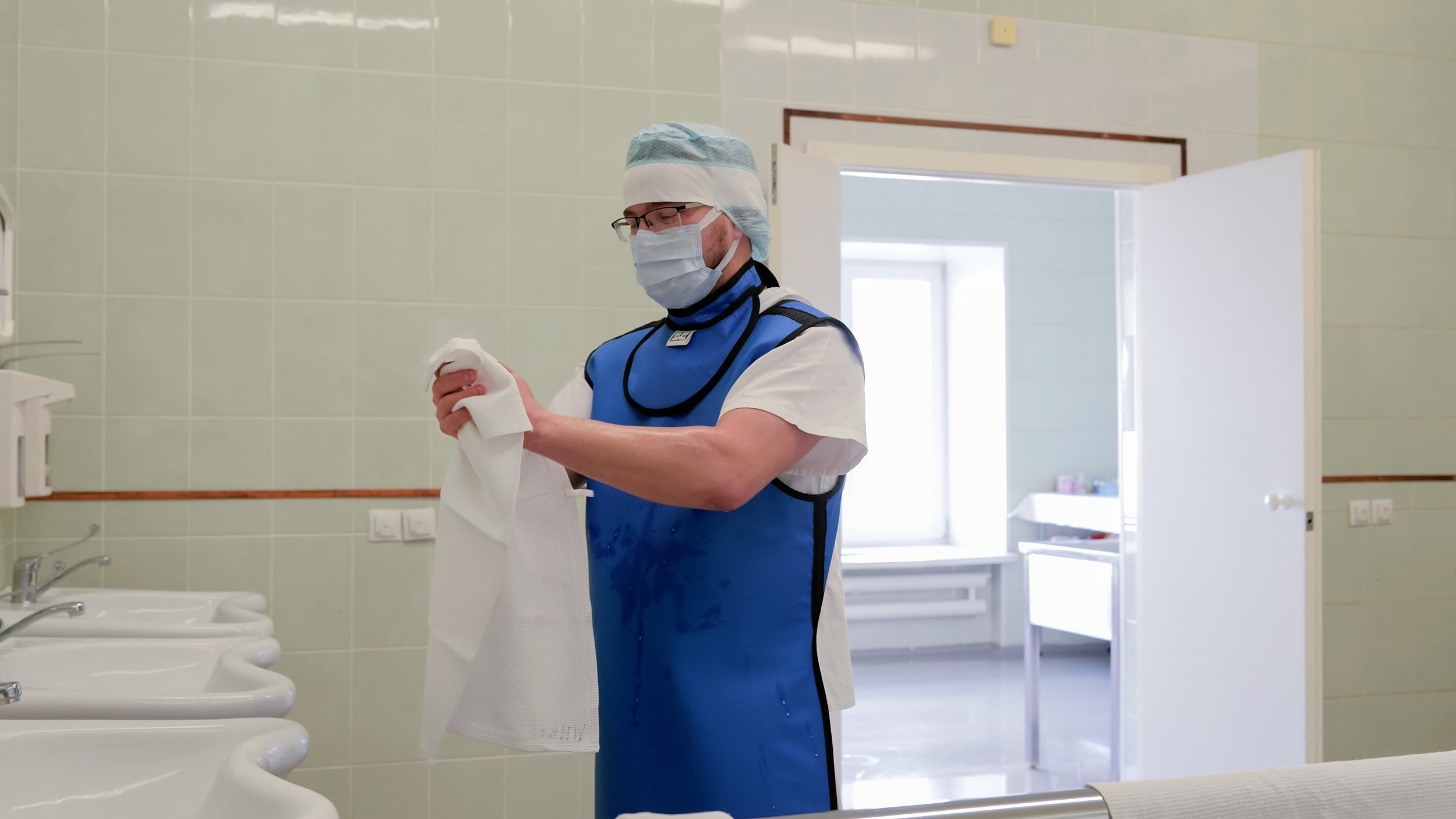
Lead aprons and thyroid collars protect staff from radiation exposure during fluoroscopy, cardiac catheterization, interventional radiology, and other procedures that use ionizing radiation. They are worn daily in operating rooms, cath labs, interventional suites, and imaging departments, and they are reused case after case, often by different staff members. Despite that level of contact, they frequently escape the routine cleaning and disinfection protocols applied to other reusable equipment in the same rooms.
A recent Infection Control Today roundtable brought infection prevention and perioperative experts together to discuss exactly this problem. Several panelists noted that lead garments stay in the room throughout a case, yet routinely get skipped when that room is cleaned between cases. One panelist cited ATP testing that measured OR lead garments at roughly nine times the contamination level of a public gas pump handle, a comparison meant to make the scale of the problem concrete for leadership. Another panelist pointed to a lack of standardized guidance as a central obstacle. Hospitals may keep records confirming aprons were cleaned, but what that cleaning actually involved is rarely consistent from one facility to the next.
This Isn't New to ICCS
At Infection Control Consulting Services (ICCS), we have considered lead apron and thyroid collar disinfection one of the most overlooked low-level disinfection items in the perioperative and procedural space for years, and this roundtable confirms it from a national stage. We have been flagging this gap since entering the ASC space in the mid-2000s.
Surveyors who concentrate heavily on environmental cleaning and disinfection may cite facilities for failing to disinfect these garments after each use. When aprons are hung in the operating or procedure room rather than stored elsewhere, the expectation is a wipe-down between every case, but in our experience that standard isn't applied consistently across facilities, regardless of size or setting.
Why the Gap Persists
A few factors combine to keep lead garment disinfection off the radar in many facilities:
No device-specific cleaning mandate. Radiation protective clothing is regulated by the FDA as a Class I medical device under 21 CFR 892.6500, the lightest level of premarket oversight. That classification covers construction and labeling. Cleaning frequency is left to facility policy and manufacturer guidance.
Inconsistent or missing manufacturer instructions for use. Some manufacturers specify wiping down garments after every use; others say little or nothing about cleaning frequency at all. Staff who rely on the instructions for use as their reference point end up with different expectations depending on which garment they are wearing.
Unclear ownership. Lead garment care touches infection prevention, perioperative or procedural leadership, and radiology or radiation safety, but it belongs fully to none of them. When no single department is accountable for cleaning, inspection, and documentation, the task is easy to lose track of.
AORN's Guideline for Radiation Safety does address care of these garments, recommending that facilities involve an interdisciplinary team, including infection prevention and the radiation safety officer, in selecting an appropriate disinfectant, allowing it to dry completely before storage, and storing garments without folding or creasing to preserve both the shielding material and the surface that is being disinfected. That guidance exists. The gap is in how consistently it gets translated into a documented, facility-specific protocol.
Closing the Gap
A few practical steps bring lead garment disinfection in line with the rest of your environmental cleaning program:
Assign clear ownership across infection prevention, perioperative or procedural leadership, and radiology, so the routine doesn't fall through the cracks between departments.
Establish a written wipe-down protocol between cases for garments that stay in the room, using a disinfectant appropriate for the garment's outer material.
Confirm manufacturer instructions for use are on file for every garment in circulation, and reconcile any inconsistencies across vendors into a single facility policy.
Build periodic deeper cleaning into your environmental services or biomedical schedule, separate from the between-case wipe-down.
Consider objective data, such as ATP testing, to demonstrate contamination levels and build leadership support for the protocol.
You do not need a new federal standard to fix this. Treat lead garments the way you already treat every other piece of reusable equipment in your procedural areas: a documented protocol, a clear owner, and routine verification that the protocol is being followed.
How ICCS Can Help
We work with ambulatory surgery centers, freestanding radiology centers, and other facilities to close gaps like this one — the kind that doesn't surface until a surveyor asks the right question. If lead apron and thyroid collar disinfection isn't currently part of your written environmental cleaning protocol, we can help you build one and make sure your staff, your documentation, and your survey readiness are aligned.
Frequently Asked Questions About Lead Apron Disinfection
Do Joint Commission, AAAHC, or other accrediting bodies specifically require disinfection of lead aprons between uses?
No accrediting body that we are aware of names lead aprons or thyroid collars specifically in its standards. Their environmental cleaning and disinfection standards apply broadly to reusable equipment and high-touch surfaces in procedural areas, and surveyors who focus closely on environmental cleaning have cited facilities for gaps in disinfecting these garments as part of that broader review.
How often should lead aprons and thyroid collars be cleaned?
At minimum, garments that stay in the room between cases should be wiped down after each use. Facilities should also build in periodic deeper cleaning on a schedule consistent with manufacturer instructions for use, since a daily wipe-down alone does not replace more thorough cleaning.
Is there a specific federal or industry standard that governs lead garment disinfection?
Not one specific to these garments. Lead aprons and thyroid collars are regulated by the FDA as Class I medical devices under 21 CFR 892.6500, a classification focused on construction and labeling rather than cleaning protocols. AORN's Guideline for Radiation Safety offers recommendations on disinfectant selection, drying, and storage, and general CDC environmental hygiene principles apply, but no single standard sets a required cleaning frequency the way it does for some other categories of reusable equipment.