

Cardiac Implantable Electronic Device Infection Significantly Increases Mortality Risk, Study Shows

Pacemaker.jpg

The results of a study presented at the recent American Heart Association Scientific Sessions indicate that patients with a cardiac implantable electronic device (CIED) who experience a "major" infection face a significant risk of mortality and impaired quality of life.

As Cardiac Rhythm News (CRN) reports, major infection was defined as "… resulting in CIED system removal, an invasive CIED procedure, treatment with long-term suppressive antibiotic therapy with infection recurrence after discontinuation of antibiotic therapy, or resulting in death."

The study, which involved nearly 7,000 patients, found that a major infection was associated with a threefold risk of mortality at one year and impaired quality of life through six months.

The study was presented by Dr. Bruce Wilkoff of Cleveland Clinic. CRN quotes him as concluding, "This large, prospective analysis corroborates and extends understanding of the impact of CIED infections as seen in real-world datasets. CIED infections severely impact mortality, quality of life, healthcare utilization and cost in the U.S. healthcare system."

CIEDs include "… pacemakers for bradyarrhythmia treatment, implantable cardioverter defibrillators for tachyarrhythmia management and cardiac resynchronization therapy devices for systolic dysfunction with conduction delays, according to the Anesthesia Patient Safety Foundation.

CDC Updates Core Elements of Hospital Antibiotic Stewardship Programs

Core elements cover.jpg

The Centers for Disease Control and Prevention (CDC) has updated its "core elements" of hospital antibiotic stewardship programs.

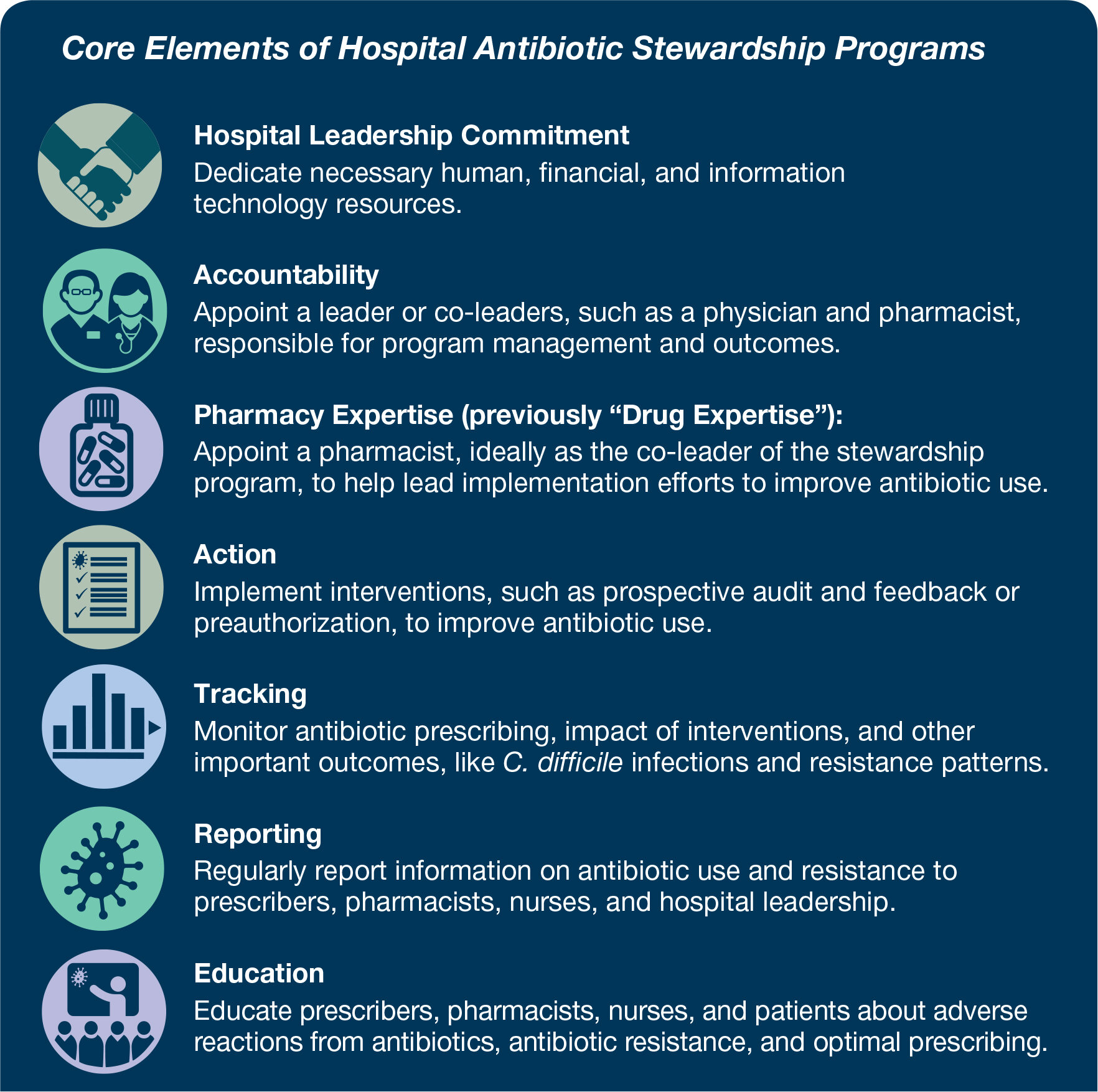
First released in 2014, the core elements are intended to be an adaptable framework that any hospital can use to guide its efforts to develop and implement antibiotic stewardship programs and help improve antibiotic prescribing. The core elements are comprised of seven structural and procedural components CDC has determined is associated with successful antibiotic stewardship programs: hospital leadership commitment, accountability, pharmacy expertise (formerly "drug expertise"), action, tracking, reporting and education.

CDC said its updates "reflect both lessons learned from five years of experience as well as new evidence from the field of antibiotic stewardship."

Major updates include the following:

  • Hospital leadership commitment: Dedicate necessary human, financial and information technology resources. This includes hospital leadership better ensuring that antibiotic stewardship programs leadership has dedicated time and resources to operate the program effectively, along with ensuring that program leadership has regularly scheduled opportunities to report stewardship activities, resources and outcomes to hospital leadership.

  • Accountability: Appoint a leader or co-leaders, such as a physician and pharmacist, responsible for program management and outcomes.

  • Pharmacy expertise: Appoint a pharmacist, ideally as the co-leader of the stewardship program, to lead implementation efforts to improve antibiotic use.

  • Action: Implement interventions, such as prospective audit and feedback or preauthorization, to improve antibiotic use. The update includes other examples of interventions, such as facility-specific treatment recommendations. The update also emphasizes the importance of actions focused on the most common indications for hospital antibiotic use (i.e., lower respiratory tract infection (e.g., community-acquired pneumonia), urinary tract infection and skin and soft tissue infection). A category of nursing-based actions was added in the update.

  • Tracking: Monitor antibiotic prescribing, impact of interventions and other important outcomes like Clostridium difficile infection and resistance patterns.

  • Reporting: Regularly report information on antibiotic use and resistance to prescribers, pharmacists, nurses and hospital leadership.

  • Education: Educate prescribers, pharmacists and nurses about adverse reactions from antibiotics, antibiotic resistance and optimal prescribing. The update notes that case-based education through prospective audit and feedback and preauthorization are effective methods to provide education on antibiotic use. The update also suggests engaging nurses in patient education efforts.

As CDC notes, U.S. hospitals have made considerable progress implementing the core elements. In 2018, 85% of acute care hospitals reported having all seven of the core elements in place, compared to only 41% in 2014.

For more information about the update, download "The Core Elements of Hospital Antibiotic Stewardship Programs: 2019" and watch a CDC-produced video discussing what's new in the core elements.

Core elements full.jpg

FDA Clears Duodenoscope With Disposable Elevator Piece

FDA-Social-Graphic.png

The U.S. Food & Drug Administration (FDA) has announced it has cleared the first duodenoscope with a sterile, disposable elevator component: the Pentax Medical Video ED34-i10T2.

It is expected that the inclusion of such a component will help reduce infections associated with cleaning, disinfection and sterilization of duodenoscopes as the disposable component reduces the number of parts that must reprocessed between uses.

As Infection Control Consulting Services (ICCS) states in its recent special report on "10 of the Scariest Healthcare Infections and Threats," duodenoscopes have become synonymous with infections, some of which have contributed to patient deaths. Despite the issue receiving significant attention over the past several years, ICCS noted in April that duodenoscope reprocessing remains a significant infection prevention challenge. In August, FDA issued a safety communication advising hospitals and endoscopy facilities to transition away from fixed endcap duodenoscopes and begin using duodenoscopes with disposable components.

As Dr. Jeff Shuren, director of the FDA's Center for Devices and Radiological Health, states in an FDA release, "Duodenoscopes with a disposable elevator component represent another major step toward lowering the risk of infection among patients who undergo procedures with these devices. … We encourage manufacturers of these devices to continue to pursue innovations that will help reduce risk to patients, and also encourage hospitals and other healthcare facilities where these procedures are performed to begin or continue transitioning to devices with disposable components that are easier to reprocess."

In October, FDA cleared GI Scientific's ScopeSeal duodenoscope protective device. As the company notes, it is the first device for protecting the distal end of a duodenoscope from contamination during endoscopic retrograde cholangiopancreatography (ERCP) procedures. ScopeSeal is a single-use disposable device that sealings the infection prone distal end of the Olympus duodenoscope used in ERCP procedures.